Cats purr by rapidly twitching the muscles of their voice box, which makes the air vibrate as they breathe both in and out. They purr when they're content, but also when they're stressed, hurt or giving birth. That's why a purr may mean something closer to "stay close" or "I'm calming down" than simply "I'm happy."
So what is going on inside that furry little engine?
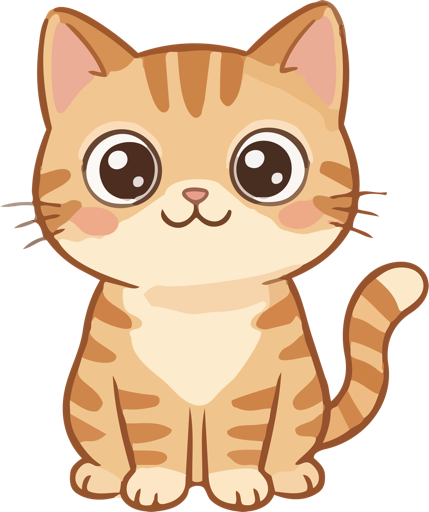
Cats can sleep 12 to 16 hours a day.
How do cats purr?
A purr doesn't come from the mouth or the nose. It starts in the larynx, the voice box in the throat. In the classic explanation, the brain sends a steady rhythm of signals to the muscles there. They tighten and relax many times a second, opening and closing the gap between the vocal folds, and the air flowing through starts to vibrate.
What makes a purr special is that it keeps going while the cat breathes in and while it breathes out, with only a tiny pause in between. That's why it sounds like a motor rather than a string of separate meows.
Purrs are deep. According to feline geneticist Leslie Lyons, writing in Scientific American, they sit between about 25 and 150 hertz. In 2023, a lab study in Vienna showed that a cat's voice box could make purr-like sounds with air alone, helped by small pads of tissue in the vocal folds. So the brain-and-muscle story may not be the whole picture, and scientists are still working out the details.
When do kittens start to purr?
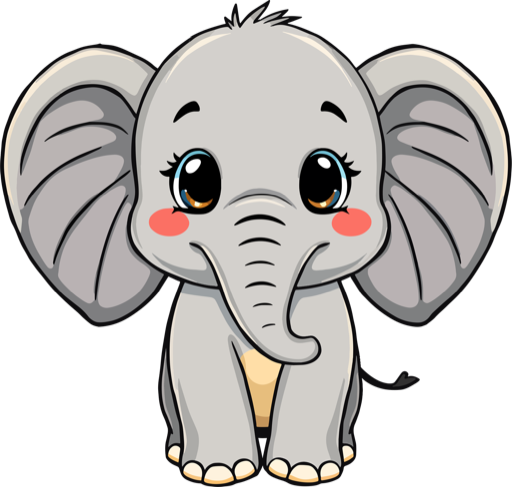
A baby cat is called a kitten, and most kittens are born with blue eyes.
Kittens are born with their eyes closed and can't hear yet, so touch and vibration matter a lot. They can purr when they're only a few days old, often while nursing. A mother cat purrs too, and that gentle buzz may help her tiny kittens find her and stay close. Purring is one of the very first ways a mother and her kittens keep in touch.
Many grown cats keep a bit of that kitten behavior. Kneading a soft blanket while purring is thought to echo the way kittens press against their mother to get the milk flowing.
Do cats purr only when they're happy?
No, and this surprises a lot of cat lovers. Cats often purr while being stroked, curled up in a sunny spot or kneading your lap. But they may also purr when they're frightened, at the vet, injured, giving birth or very ill.
One idea is that purring helps a cat soothe itself, a bit like a person humming when nervous. So the purr is only part of the message. Relaxed ears, slow blinks and a loose body tell a very different story from a cat that is hiding and tense.
Some purrs are requests. A 2009 study at the University of Sussex found that cats asking for food can mix a high-pitched cry into their purr, a sound people find surprisingly hard to ignore. If you've ever been purred awake at breakfast time, now you know what was going on.
Can a cat's purr heal bones?
You may have read that purring helps cats heal. Vibrations in a similar low range have been studied for helping bones and tissue, and some researchers have suggested that purring might help keep a resting cat's bones and muscles strong. It's an intriguing idea, but it is still a hypothesis. It hasn't been proven that purring makes cats heal faster.
Can big cats purr?
A lion's roar can be heard up to 8 kilometers away.
Some can, and some roar instead. Lions, tigers, leopards and jaguars can roar, but they can't purr continuously the way a house cat does. Cheetahs and pumas are the other way round: they purr, chirp and hiss, but they can't roar. According to the wild cat conservation group Panthera, the difference comes down to the structure of the voice box and the small bones that support it.
So a lion can roar loud enough to be heard kilometers away, but if you want a big cat that purrs, the cheetah is your cat.
Quick purr facts:
- Cats purr with their mouths closed, breathing in and out.
- Most purrs sit between about 25 and 150 hertz.
- Kittens can purr when they're just a few days old.
- Cats purr when content, but also when stressed or hurt.
- Cheetahs and pumas purr; lions and tigers roar.
In Spinbo, the cat lives on the Animals wheel, the kitten on Baby Animals and the lion on Wild Animals, all in the Wild Side world with its own sky, music and sounds. Spin, and each card gives you a name and one clear sentence, read aloud in your language and in a second language you choose.
Next time a cat settles on your lap and switches on its tiny engine, you'll know there's more going on than meets the ear.